
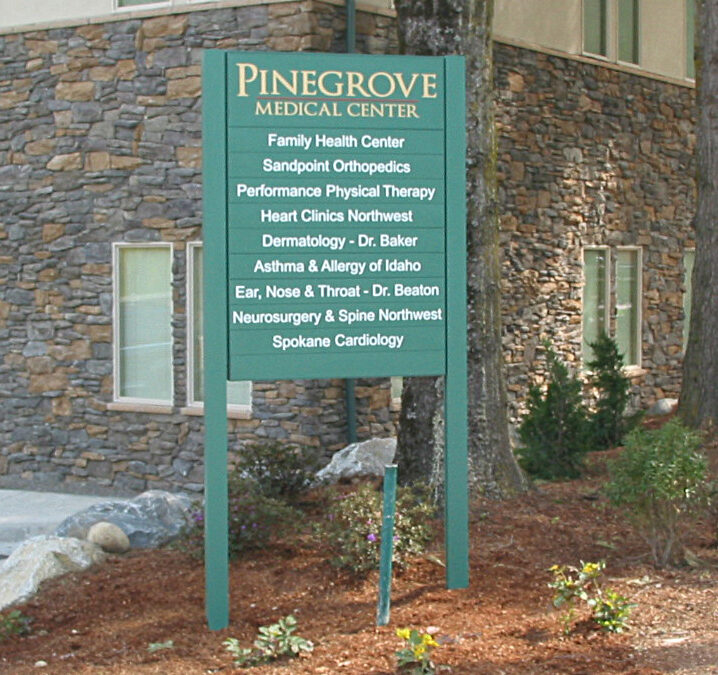
Medical facilities across Boulder County face a unique wayfinding challenge. From the multi-building complexes near Foothills Hospital to the growing medical office parks along Highway 287 in Longmont, patients and visitors often arrive already stressed, unfamiliar with the building, and pressed for time. In a region where healthcare campuses continue to expand—and where winter weather can make outdoor navigation difficult—clear, well-designed business directories aren’t just helpful. They’re essential to the patient experience.
Quick Answer
Business directories are large-format signs that list multiple tenants, departments, or destinations within a building or campus. For Boulder-area hospitals and medical facilities, directory signs reduce confusion at entry points, improve patient flow, and minimize staff interruptions caused by lost visitors. The most effective medical directories combine clear typography, logical organization, and easy-to-update panels that accommodate tenant changes.
Why Directory Signs Matter for Hospitals and Medical Facilities
Healthcare environments are inherently complex. A single medical office building might house primary care physicians, specialists, imaging centers, labs, and administrative offices—all with separate suites and varying hours. Patients navigating these spaces are often dealing with health concerns, mobility limitations, or time-sensitive appointments. When directory signage fails, the consequences ripple through the entire facility: late appointments, crowded waiting rooms, frustrated staff answering the same directional questions repeatedly, and patients who associate their negative wayfinding experience with the quality of care itself. Effective business directories solve these problems at the source, providing clear information exactly where visitors need it most.
Best Directory Sign Types for Medical Facilities
Not all directory signs serve the same purpose, and medical facilities typically benefit from a layered approach. Lobby directories—often wall-mounted or freestanding—provide the primary orientation point, listing all tenants or departments with suite numbers and floor locations. These work best with changeable panel systems that allow updates as tenants move or new practices join the building. Floor directories, positioned near elevators and stairwells, help visitors confirm they’ve reached the correct level. For larger campuses, exterior monument directories at parking areas guide visitors before they even enter the building. Digital directories offer the advantage of real-time updates and interactive wayfinding, though they require reliable power and ongoing maintenance. For most Boulder-area medical facilities, a combination of traditional changeable directories and strategic digital displays provides the best balance of durability, flexibility, and user experience.
Local Considerations for Boulder County Medical Signage
Boulder County’s mix of historic buildings, modern medical complexes, and strict municipal sign codes creates specific challenges for directory signage. In downtown Boulder, medical offices in older buildings often work within tight space constraints and landmark preservation requirements. The city’s sign code emphasizes quality materials and restrained design—directories that look permanent and professional, not temporary or overly commercial. In Longmont’s growing medical corridor near the hospital district, newer construction allows for more integrated directory systems planned from the start. Lafayette and Erie have seen rapid healthcare expansion, with multi-tenant medical buildings requiring scalable directory solutions that can grow with the facility. Even smaller communities like Lyons present unique needs, where a single medical building serves as a critical healthcare hub and clear wayfinding supports the entire community.
Common Directory Sign Mistakes in Healthcare Settings
The most frequent mistake medical facilities make with business directories is treating them as an afterthought. Directories installed after construction often end up in suboptimal locations—behind doors, in poor lighting, or too far from natural decision points. Another common error is choosing directory systems that are difficult to update. Medical tenants change frequently, and a directory that requires professional service for every name change quickly becomes outdated and unreliable. Poor typography choices—fonts that are too small, too decorative, or lacking contrast—make directories useless for the significant portion of patients with vision limitations. Finally, many facilities underestimate the need for multilingual directories. Boulder County’s diverse population includes substantial Spanish-speaking communities, and directories that only serve English readers fail a significant portion of patients.
Serving Boulder and Nearby Communities
Medical facilities throughout Boulder County share common wayfinding challenges, but each community has distinct characteristics that influence directory sign planning. Boulder’s medical offices often serve a highly educated population that expects sophisticated, well-designed environments—including signage. Longmont’s healthcare sector has grown substantially, with new urgent care centers, specialty clinics, and the expanded UCHealth campus all requiring comprehensive directory systems. Lafayette and Erie continue to add medical office space to serve their rapidly growing populations, and these newer facilities have the advantage of planning directory signage during construction rather than retrofitting later. Gunbarrel’s medical offices, serving a mix of Boulder commuters and local residents, benefit from directory systems that match the area’s professional character. From the mountain-adjacent practices in Lyons to the major hospital complexes in Boulder and Longmont, effective business directories share the same fundamental purpose: helping patients find their way with confidence.
Planning Your Medical Facility’s Directory Signage
Effective directory sign planning starts with understanding traffic patterns. Where do patients enter? Where do they make directional decisions? What questions does your front desk answer most frequently? These insights guide directory placement and content. Consider the update frequency your facility requires—high-turnover medical buildings need systems designed for easy changes, while stable single-practice facilities can invest in more permanent solutions. Think about lighting conditions at each directory location, and specify materials with appropriate contrast and reflectivity. For multi-building campuses, develop a consistent design language that helps visitors recognize directory signs throughout the property. Finally, plan for ADA compliance from the start—tactile elements, appropriate mounting heights, and sufficient contrast aren’t optional features, they’re requirements that protect your facility and serve all patients.
Frequently Asked Questions
How often should medical facility directories be updated?
Medical facility directories should be reviewed monthly and updated immediately whenever tenant information changes. Outdated directories cause patient confusion and reflect poorly on the facility’s professionalism. Changeable panel systems make routine updates straightforward, while digital directories can be modified in real-time. Budget for regular directory maintenance just as you would for other facility upkeep, and designate a staff member responsible for keeping directory information current.
What size should directory signs be for a medical office building?
Directory sign size depends on viewing distance and the amount of information displayed. Lobby directories typically range from 24 by 36 inches for smaller buildings to 48 by 72 inches or larger for major medical complexes. The key measurement is letter height—directory text should be readable from at least 10 feet away, which generally requires minimum letter heights of one inch for primary listings. ADA-compliant tactile directories have specific requirements for character size and mounting height.
Are digital directory signs worth the investment for healthcare facilities?
Digital directories offer advantages for large, frequently changing medical facilities—real-time updates, interactive wayfinding, and the ability to display announcements or emergency information. However, they require reliable power, network connectivity, and ongoing technical maintenance. For smaller medical buildings with stable tenants, traditional changeable directories often provide better long-term value. Many facilities use a hybrid approach with digital displays at main entries and traditional directories at secondary locations.
What ADA requirements apply to medical facility directory signs?
ADA requirements for directory signs include specific standards for tactile characters, Braille, mounting height, and contrast. Permanent room identification signs must include tactile text and Grade 2 Braille mounted between 48 and 60 inches above the floor. Directory signs listing multiple destinations have different requirements than individual room signs. Medical facilities must also consider accessibility for patients with mobility devices, ensuring directories are positioned where wheelchair users can approach and read them comfortably.
How do Boulder's sign codes affect medical facility directories?
Boulder’s sign code emphasizes quality, permanence, and aesthetic compatibility with surroundings. Medical facility directories must meet size limitations, material standards, and sometimes design review requirements depending on the zoning district. Interior directories face fewer restrictions than exterior monument signs, but illuminated directories may require permits. Lafayette, Longmont, and Erie have their own sign codes with varying requirements. Working with a sign company familiar with local regulations ensures your directory project proceeds smoothly through any required approval processes.