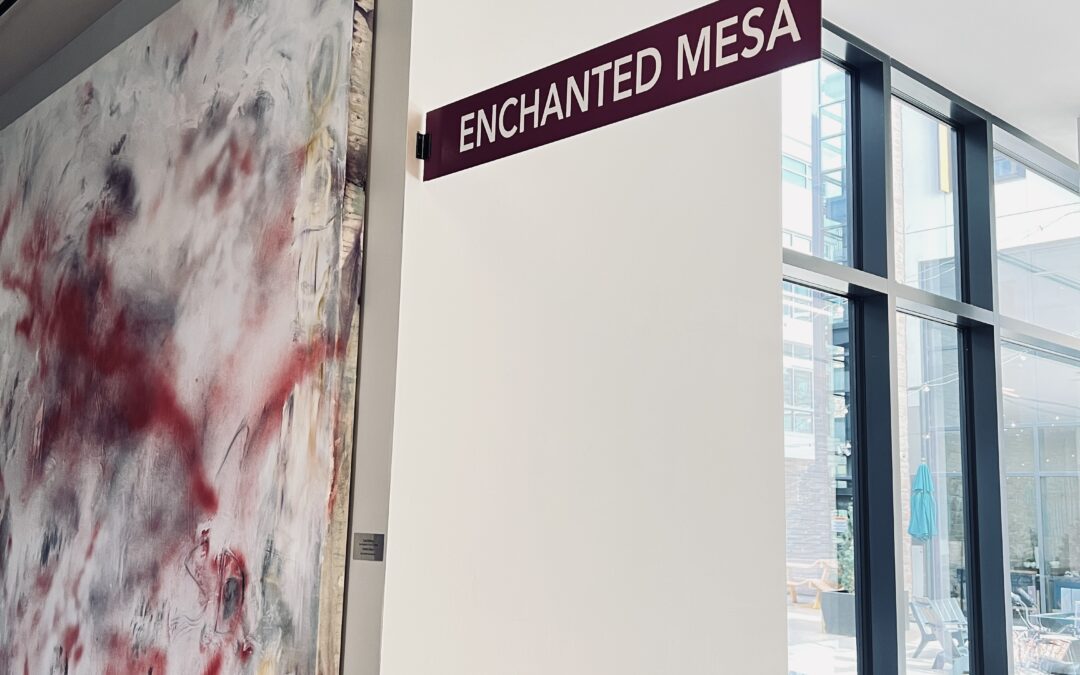
Walk down Pearl Street on any evening and you’ll notice the blade signs first—perpendicular projections extending from brick facades, catching the last light of the Flatirons sunset. These signs have guided visitors to Boulder’s hotels, restaurants, and gathering places for generations. From the historic storefronts along Main Street in Longmont to the growing hospitality scene in Erie’s town center, blade and projecting signs remain one of the most effective ways for hospitality businesses to announce their presence to pedestrians and slow-moving traffic. In a region where walkable districts and outdoor dining define the guest experience, the right projecting sign does more than mark a location—it creates an invitation.
Quick Answer
Blade signs (also called projecting signs) mount perpendicular to your building facade, making them visible to pedestrians and vehicles approaching from either direction along a sidewalk or street. For Boulder-area hospitality businesses—hotels, restaurants, bars, and event venues—blade signs are essential for foot traffic capture in walkable districts. Most Boulder County municipalities allow blade signs between 6 and 12 square feet with minimum 8-foot clearance, though Pearl Street Mall and historic districts have specific design requirements.
Why Blade Signs Matter for Hospitality Businesses
Hospitality runs on visibility. Unlike retail, where customers often arrive with a specific purchase in mind, hospitality businesses depend on impulse decisions—a couple choosing where to eat, a traveler looking for their hotel, a group searching for a place to gather. Blade and projecting signs address this by extending your presence into the pedestrian sightline.
Consider the physics: a flat wall sign parallel to your building is essentially invisible to someone walking down the sidewalk until they’re directly in front of your door. A blade sign projects outward, announcing your business from 50 feet or more in either direction. For a restaurant in downtown Boulder competing with dozens of options along Pearl Street, or a boutique hotel on Longmont’s Main Street trying to help guests find the entrance, that extended visibility translates directly to foot traffic.
The hospitality industry also benefits from the dimensional, crafted quality that blade signs communicate. A well-designed projecting sign—whether it’s a carved wood panel, illuminated cabinet, or custom metalwork—signals quality and attention to detail. Guests notice. In a market where Boulder visitors expect locally-owned, thoughtfully-designed spaces, your signage sets expectations before anyone walks through the door.
Best Blade Sign Types for Hotels, Restaurants, and Venues
Not all blade signs serve the same purpose. The right choice depends on your building, your brand, and your district’s requirements.
**Illuminated Cabinet Blade Signs** work well for hotels and restaurants that operate into evening hours. These signs house internal LED lighting behind translucent faces, providing consistent visibility after dark. Many Boulder hospitality businesses use single-face illuminated blades that light toward approaching pedestrians while maintaining a finished appearance from behind.
**Carved and Dimensional Blade Signs** suit historic districts and businesses emphasizing craft or heritage. Hand-carved HDU (high-density urethane) or routed wood blades with applied graphics and gold leaf remain popular on Pearl Street and in Lyons, where the mountain-town aesthetic favors traditional materials.
**Metal Blade Signs** with cut-out lettering or raised dimensional elements offer durability and a contemporary feel. Aluminum and steel blades with powder-coat finishes resist Colorado’s UV exposure and temperature swings better than some painted options.
**Hanging Blade Signs** suspended from decorative brackets provide a classic look that works particularly well for restaurants, wine bars, and bed-and-breakfast properties. The bracket itself becomes part of the design—wrought iron scrollwork or clean modern arms both have their place depending on your brand.
**Double-Sided Projecting Signs** maximize visibility for corner locations or businesses with significant foot traffic from both directions. Most blade signs are inherently double-sided, but corner-mounted blades with angled faces can capture traffic from multiple streets.
Local Regulations and Permit Requirements
Boulder County municipalities each maintain their own sign codes, and blade signs face specific requirements you’ll need to navigate.
**Boulder** requires sign permits for all projecting signs. Within the Pearl Street Mall district, blade signs must complement the historic character and typically cannot exceed 6 square feet per face. The Downtown Boulder Design Guidelines influence approval, particularly for illumination and materials. Standard commercial zones allow somewhat larger blade signs but still require 8-foot minimum clearance over pedestrian areas and 15 feet over vehicular areas.
**Longmont** permits blade signs in commercial and mixed-use zones with a maximum projection of 4 feet from the building face. The Main Street district has design guidelines encouraging traditional materials and crafted appearances consistent with the historic downtown character.
**Lafayette** allows projecting signs up to 12 square feet per face in most commercial zones, with 8-foot pedestrian clearance requirements. Old Town Lafayette maintains design review for signs to preserve neighborhood character.
**Erie** has seen rapid hospitality growth, and the town’s sign code accommodates blade signs in commercial areas while encouraging coordinated signage within planned developments. The Erie Parkway corridor and Old Town Erie have different requirements worth reviewing early in your planning.
**Lyons** maintains strict aesthetic standards reflecting the town’s historic mountain character. Blade signs generally must be non-illuminated or use indirect illumination, with wood, metal, or stone materials preferred.
**Gunbarrel** falls under Boulder County jurisdiction for unincorporated areas, which has its own sign code distinct from the City of Boulder. Permit requirements and design standards vary by zoning.
Regardless of location, all blade signs require structural engineering review to ensure the mounting system can handle wind loads—a real consideration along the Front Range where gusts regularly exceed 50 mph.
Common Mistakes Hospitality Businesses Make with Blade Signs
After years of working with Boulder-area hotels and restaurants, certain patterns emerge in what goes wrong with blade sign projects.
**Undersizing the sign** ranks first. Business owners, concerned about being too bold, often request blade signs smaller than code allows. A 4-square-foot blade sign on a three-story hotel is nearly invisible. Work with your sign company to model the proportions before committing—a sign that looks large in a rendering often appears appropriate once installed at height.
**Ignoring the bracket** is another common error. The mounting bracket is visible and contributes to (or detracts from) your overall look. A beautiful carved blade sign loses impact if hung from a basic utility bracket. Invest in brackets that match your brand.
**Choosing the wrong illumination** creates problems after dark. Internal illumination that’s too bright reads as cheap and glaring, while insufficient lighting renders the sign invisible. Halo-lit (reverse-lit) options and gooseneck lights offer alternatives to front-lit cabinet signs that may suit your aesthetic better.
**Failing to coordinate with building owners** delays projects in Boulder’s commercial districts, where many hospitality businesses lease space. Blade signs require facade penetrations and structural attachments. Get landlord approval and building engineering specifications before finalizing your design.
**Skipping the permit process** leads to removal orders and fines. Boulder’s code enforcement actively monitors commercial signage. The permit process exists partly to ensure public safety (proper clearances, structural adequacy) and partly to maintain district character. Work with it rather than around it.
Serving Boulder County’s Hospitality Community
Niwot Signs works with hospitality businesses throughout Boulder County, from boutique hotels on Pearl Street to brewpubs in Erie’s expanding downtown. We understand that a blade sign isn’t just a marker—it’s part of the guest experience, visible in every photo taken outside your establishment and shaping first impressions before anyone steps inside.
Our process includes site evaluation to assess mounting options and visibility angles, design consultation to match your brand and meet local code requirements, structural engineering for wind-load compliance, permitting assistance for Boulder, Longmont, Lafayette, Erie, Lyons, and Gunbarrel jurisdictions, and professional installation by certified crews.
We also provide ongoing maintenance for illuminated blade signs—LED replacements, face cleaning, and structural inspections—because a blade sign 15 feet above a busy sidewalk needs to stay secure and looking sharp.
Planning Your Blade Sign Project
If you’re considering a blade sign for your hospitality business, start with these steps:
**Document your location.** Photograph your building facade from pedestrian and vehicle approaches. Note the mounting surface material (brick, stucco, wood frame), any existing penetrations or signage, and the height of your ground floor.
**Review local codes.** Contact your municipality’s planning department or check their website for sign code documents. Note maximum sign area, projection limits, clearance requirements, and any design review processes for your district.
**Clarify your brand standards.** If you have brand guidelines, logos, or color specifications, gather those files. If you’re still developing your identity, a sign company can help translate your vision into a physical design.
**Establish your budget range.** Simple non-illuminated blade signs with standard brackets start around $1,500 installed. Illuminated cabinet signs with custom brackets typically run $3,500 to $7,000. Highly custom carved or fabricated pieces can exceed $10,000. Knowing your range helps focus the design conversation.
**Coordinate with your landlord.** If you lease your space, get written approval for facade-mounted signage before investing in design work.
With those elements in place, you’re ready for a productive consultation about blade sign options that will serve your business for years to come.
Frequently Asked Questions
How far can a blade sign project from my building in Boulder?
Boulder allows blade signs to project up to 4 feet from the building face in most commercial zones, though pedestrian clearance requirements (minimum 8 feet) and vehicular clearance (15 feet where applicable) may limit your options depending on sidewalk width and building setback. The Pearl Street Mall district and other special zones have additional restrictions. Your sign company should conduct a site survey to determine the maximum practical projection for your specific location.
Do blade signs need to be illuminated for a restaurant?
Illumination depends on your operating hours and location. Restaurants open for dinner service generally benefit from illuminated blade signs, especially in districts with limited street lighting. Options include internally-lit cabinet signs, halo-lit dimensional letters, or externally-lit signs using gooseneck fixtures. Some Boulder districts restrict illumination types or require indirect lighting only. A non-illuminated carved or metal blade sign can work well if ambient lighting is sufficient or if your primary traffic occurs during daylight hours.
What materials hold up best for blade signs along the Front Range?
Colorado’s intense UV exposure, dramatic temperature swings, and high winds challenge all exterior signage. Aluminum and HDU (high-density urethane) offer the best combination of durability and design flexibility. Aluminum resists corrosion and takes powder-coat finishes well. HDU can be carved for dimensional effects and holds paint longer than wood in direct sun. Natural wood blade signs are beautiful but require more frequent refinishing—typically every 3 to 5 years—to maintain appearance in Boulder’s climate.
Can I install a blade sign on a historic building in Longmont?
Yes, but historic properties in Longmont’s Main Street district require design review through the Longmont Historic Preservation Commission. They’ll evaluate whether your proposed sign is compatible with the building’s historic character, including materials, size, placement, and mounting method. Reversible mounting systems that minimize facade damage are generally preferred. Working with a sign company experienced in historic district projects helps streamline approval and ensures your blade sign enhances rather than detracts from the building’s character.
How long does the blade sign permit process take in Boulder County?
Permit timelines vary by jurisdiction. City of Boulder permits typically take 2 to 4 weeks for standard commercial zones, longer if design review is required. Longmont and Lafayette average 2 to 3 weeks. Erie and unincorporated Boulder County may be faster for straightforward applications. Plan for 4 to 6 weeks total from permit application to installation, accounting for fabrication time. Rush permitting isn’t available in most jurisdictions, so build this timeline into your opening schedule if you’re launching a new hospitality venue.