Walk into any professional office along Pearl Street, step through the doors of a tech startup in Gunbarrel, or enter a financial services firm on Canyon Boulevard, and the first thing that registers—before anyone greets you, before you sit down—is the lobby sign. In Boulder County, where businesses range from converted historic storefronts to sleek Class A office buildings along the Diagonal Highway corridor, lobby signage sets the tone for every interaction that follows. Whether it’s dimensional letters mounted above a reception desk in Lafayette or an illuminated logo panel welcoming clients to a Longmont headquarters, the entryway sign is doing real work before a single word is spoken.
Quick Answer
Lobby signs are interior brand displays installed in entryways, reception areas, and foyers to identify a business and establish its professional presence. For Boulder-area businesses, the most effective lobby signs use dimensional letters, acrylic panels, or metal-cut logos mounted directly to walls or standoffs, chosen to complement the building’s interior architecture and communicate the company’s brand identity from the moment visitors walk through the door.
Why Lobby Signs Matter More Than Most Businesses Realize
A lobby sign is the physical handshake between a business and everyone who walks through the door—clients, candidates, vendors, partners, and inspectors. Research on first impressions consistently shows that people form judgments about an organization within seconds of entering a space. The lobby sign is the single most controllable element in that critical window.
For Boulder businesses competing in professional services, technology, healthcare, legal, and financial sectors, perceived quality matters. A law firm with a hand-printed paper sign taped behind the front desk communicates something very different from one with precision-cut brushed aluminum letters mounted on a feature wall. Neither approach is accidental—both send a message.
Lobby signs also serve a practical wayfinding function. In multi-tenant buildings common throughout Boulder, Longmont, and Erie, visitors rely on lobby signage to confirm they’ve reached the correct suite. Without clear identification, front desk staff spend unnecessary time redirecting lost visitors, and clients arrive to meetings already frustrated.
Beyond visitor experience, lobby signage affects the people who work there every day. Employees who walk past a well-crafted company sign each morning experience a subtle but real reinforcement of organizational identity. It’s brand culture made tangible—something particularly relevant in Boulder’s competitive hiring environment where workplace environment influences talent decisions.
Best Lobby Sign Types for Entryways and Reception Areas
Lobby signs come in a range of formats, each suited to different spaces, budgets, and brand aesthetics. Understanding the options helps Boulder business owners choose signage that aligns with their goals.
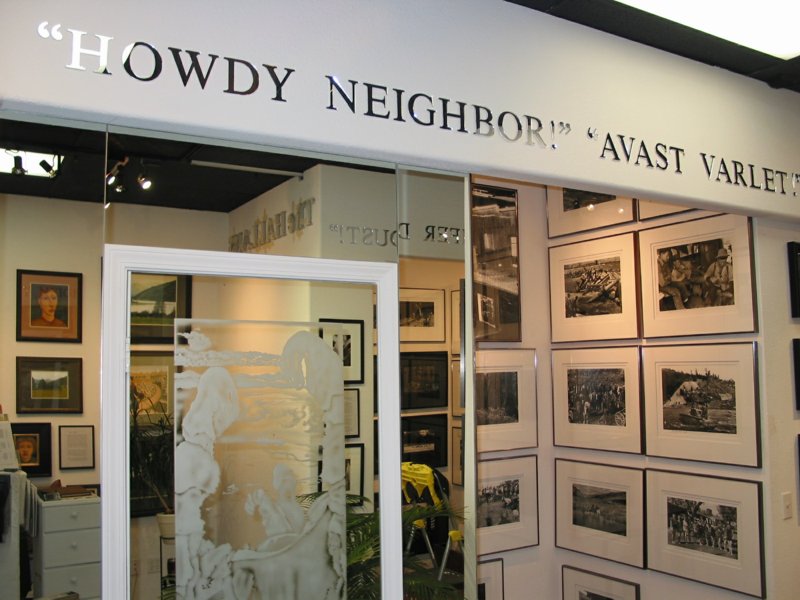
**Dimensional Letters** are individual characters—typically company names or logos—cut from metal, acrylic, PVC, or wood and mounted to the wall. These create depth and shadow effects that flat signs cannot achieve. Brushed aluminum and stainless steel letters suit professional offices, while painted acrylic offers virtually unlimited color matching. Dimensional letters are the most popular lobby sign format across Boulder County for good reason: they look substantial, photograph well, and adapt to nearly any wall surface.
**Flat-Cut Metal Letters** are precision-cut from aluminum, steel, brass, or copper and mounted with standoffs that hold the letters away from the wall. The resulting shadow adds visual interest and a modern feel. These are especially common in Boulder’s tech companies and creative agencies.
**Acrylic Panel Signs** combine a company logo or name printed or engraved on a clear, frosted, or colored acrylic panel. These can be edge-lit with LEDs for a striking glow effect—a popular choice for reception areas that benefit from dramatic presentation without the complexity of full channel letters.
**Vinyl and Printed Wall Graphics** apply directly to painted or smooth surfaces. While less dimensional than letter-based options, high-quality printed graphics allow complex imagery, gradients, and photographic elements that dimensional letters cannot reproduce. They’re also among the most cost-effective lobby sign solutions.
**Backlit and Halo-Lit Signs** use LED lighting behind dimensional letters or panels to create a glow effect on the wall. Halo lighting—where light radiates from behind each letter—creates an upscale, contemporary appearance popular in Boulder’s professional service and hospitality environments.
**Reclaimed and Natural Material Signs** use wood, stone, or mixed media to create rustic or organic presentations. In Boulder, where many businesses align with outdoor lifestyle and sustainability values, signs incorporating beetle-kill pine, reclaimed barn wood, or locally sourced stone resonate authentically with clients and employees.
Local Considerations for Boulder-Area Lobby Signs
Boulder County’s commercial real estate landscape creates specific considerations that affect lobby sign planning, design, and installation.
**Building Diversity**: Boulder’s commercial inventory ranges from historic brick buildings on Pearl Street to modern office parks in east Boulder and Gunbarrel, strip retail centers in Lafayette, and professional buildings along Longmont’s Main Street. Each building type presents different wall surfaces, ceiling heights, lighting conditions, and landlord requirements. A lobby sign designed for a polished concrete wall in a new Erie office complex requires different mounting hardware and design considerations than one destined for an exposed-brick wall in a downtown Boulder building.
**Lease and Landlord Restrictions**: Many multi-tenant buildings in Boulder have signage criteria that specify maximum dimensions, approved materials, illumination restrictions, and installation methods. Before designing lobby signage, businesses should review their lease and building signage guidelines. Some property management companies along the Foothills Parkway corridor and in Longmont’s business districts maintain strict design standards to ensure consistency across tenants.
**Natural Light Exposure**: Boulder averages over 300 days of sunshine per year, and many commercial spaces feature large windows that flood lobbies with natural light. This affects material choices—high-gloss acrylics may produce unwanted glare, while certain vinyl prints can fade under sustained UV exposure. Sign materials and finishes should account for Boulder’s intense natural light conditions.
**Altitude and Humidity**: At 5,430 feet, Boulder’s low humidity and UV intensity affect adhesives, paints, and certain plastics differently than sea-level environments. Experienced sign fabricators specify materials and installation methods rated for Colorado’s high-altitude conditions, ensuring lobby signs maintain their appearance over time.
**Community Aesthetic Values**: Boulder’s design-conscious culture extends into commercial interiors. Businesses here tend to invest more in interior branding elements, and clients and employees notice quality. A lobby sign that might pass without comment in other markets receives real attention in Boulder—making both quality craftsmanship and design coherence especially important.
**Growing Communities**: Erie, Lafayette, and Longmont are experiencing significant commercial growth, with new office buildings and mixed-use developments opening regularly. Businesses establishing new locations in these communities have the advantage of designing lobby signage as part of their initial buildout rather than retrofitting into existing conditions.
Common Mistakes Businesses Make with Lobby Signs
After years of fabricating and installing lobby signage throughout Boulder County, certain mistakes appear repeatedly. Avoiding these saves time, money, and the frustration of living with signage that doesn’t serve the business well.
**Choosing Based on Price Alone**: Budget matters, but the cheapest lobby sign often costs more in the long run. Thin vinyl letters that peel within a year or foam letters that yellow and deteriorate create a worse impression than having no sign at all. For a feature that visitors see every day for years, investing in durable materials and proper installation pays dividends.
**Ignoring Scale and Proportion**: A common error is selecting letter sizes or sign dimensions without considering the wall space and viewing distances in the actual lobby. Letters that looked appropriately sized on a computer screen may appear tiny on a large reception wall—or overwhelming in a compact entryway. Always mock up dimensions on-site before committing to production.
**Poor Color and Material Matching**: The lobby sign doesn’t exist in isolation. It shares space with paint colors, flooring, furniture, and lighting. Metallic letters that clash with existing hardware finishes or acrylic colors that fight the wall paint undermine the entire presentation. Bring material samples into the actual space under actual lighting conditions before finalizing selections.
**Neglecting Lighting**: A beautifully crafted lobby sign installed on an unlit wall disappears after 3 PM on winter afternoons. Lobby signs need intentional lighting—whether built into the sign itself, provided by dedicated accent lights, or incorporated into the room’s lighting plan. Boulder’s short winter days make this especially relevant.
**DIY Installation on Challenging Walls**: Mounting dimensional letters on drywall, brick, stone, glass, or concrete each requires specific hardware and techniques. Improper mounting leads to letters that shift, fall, or damage the wall surface. Professional installation prevents the embarrassment of a crooked company name and the liability of a sign that falls on a visitor.
**Forgetting About Updates**: Businesses change names, merge, rebrand, and relocate. Lobby signs designed without considering future changes can leave permanent wall damage when removed or replaced. Discuss changeability with your sign fabricator, especially if your company is growing or your lease has a defined term.
Serving Boulder and Nearby Communities
Lobby sign needs span every type of business and building across Boulder County. Downtown Boulder’s professional offices, coworking spaces, and creative agencies require signage that reflects the city’s blend of innovation and mountain-town character. From the tech companies clustered along the Flatiron Park corridor to the professional services firms near the Boulder County Courthouse, each lobby presents unique opportunities for impactful signage.
Longmont’s growing business community—anchored by established employers and a wave of new commercial development—presents opportunities for businesses to make strong first impressions in new spaces. The city’s mix of historic Main Street offices and modern business parks along Highway 119 calls for lobby signage that respects context while communicating contemporary brand identity.
Lafayette and Erie continue attracting businesses seeking proximity to Boulder with more accessible commercial lease rates. New office and retail construction in these communities means many businesses are designing lobby presentations from scratch—an ideal scenario for integrating signage into the overall interior design plan.
In Lyons, smaller professional offices and hospitality businesses use lobby signs to establish credibility in intimate spaces where every design element receives close attention. Gunbarrel’s office parks and commercial centers serve businesses that benefit from polished lobby presentations to match the quality of their work.
Across all these communities, the fundamental principle holds: a lobby sign is the first brand touchpoint visitors experience, and it should be as intentional as every other aspect of the business it represents.
Planning Your Lobby Sign Project
Effective lobby signage starts well before choosing fonts and finishes. A thoughtful planning process ensures the final product serves the business for years.
Begin by assessing the physical space. Measure the reception wall dimensions, note the ceiling height, identify existing lighting, and photograph the space from the visitor’s perspective—the angle people see as they walk through the door. This documentation guides every decision that follows.
Define the sign’s purpose clearly. Is the primary goal brand reinforcement for a company with strong existing recognition? Wayfinding for visitors in a multi-tenant building? Setting a specific aesthetic tone? Each purpose emphasizes different design priorities.
Establish a realistic budget that includes design, fabrication, and professional installation. Ask about material options at different price points rather than simply requesting the cheapest solution. Understanding trade-offs between materials, finishes, and illumination options leads to better decisions.
Request physical material samples rather than relying solely on digital renderings. View samples in the actual lobby under the space’s real lighting conditions. Colors, textures, and reflectivity all shift between a computer screen and a physical wall.
For Boulder-area businesses planning lobby signage projects, working with a local sign company that understands the region’s building stock, climate conditions, and design sensibilities ensures results that look right, last long, and make the impression the business deserves.
What is the best material for lobby signs in a professional office?
The best material depends on the desired aesthetic and budget. Brushed aluminum and stainless steel dimensional letters project a polished, corporate look and are extremely durable. Acrylic letters offer broader color options and can be edge-lit for added impact. For businesses seeking a warmer feel, wood or mixed-material signs incorporating metal and natural elements work well. In all cases, choose materials that complement existing interior finishes and can withstand years of daily visibility without fading or deteriorating.
How much do lobby signs typically cost?
Lobby sign costs vary significantly based on size, materials, complexity, and illumination. Simple vinyl lettering or flat-cut acrylic letters start in the low hundreds, while dimensional metal letters with halo lighting for a mid-sized reception wall typically range from several hundred to a few thousand dollars. Custom fabricated signs with premium materials, integrated lighting, and professional installation for larger lobbies represent the higher end. Request quotes based on your specific wall dimensions and design goals for accurate pricing.
Can I install a lobby sign in a leased office space?
Yes, but review your lease agreement and building signage guidelines first. Most commercial leases address interior signage—some buildings have specific size, material, and mounting restrictions. Many landlords require approval of sign designs before installation. Mounting methods matter too: some lease agreements specify that tenants must repair wall damage when signs are removed at lease end. Discuss these requirements with your sign company before production to ensure compliance and avoid unexpected costs when you eventually move.
Do lobby signs need to be illuminated?
Lobby signs don’t require illumination, but lighting dramatically affects their impact. In naturally well-lit lobbies with large windows, non-illuminated dimensional letters can look excellent during daytime hours. However, lobbies with limited natural light, evening operating hours, or interior positions away from windows benefit significantly from built-in illumination or dedicated accent lighting. Backlit and halo-lit options create visual drama, while simple overhead spotlights can highlight non-illuminated signs effectively.
How long does it take to design, produce, and install a lobby sign?
A typical lobby sign project takes two to four weeks from initial consultation through installation. The design and approval phase usually requires one to two weeks depending on revision cycles. Fabrication ranges from one to three weeks based on materials, complexity, and illumination components. Installation itself is typically completed in a few hours for standard dimensional letter signs. Complex projects with custom lighting, unusual mounting surfaces, or large-scale installations may extend the timeline. Planning ahead avoids rush charges and ensures material availability.