
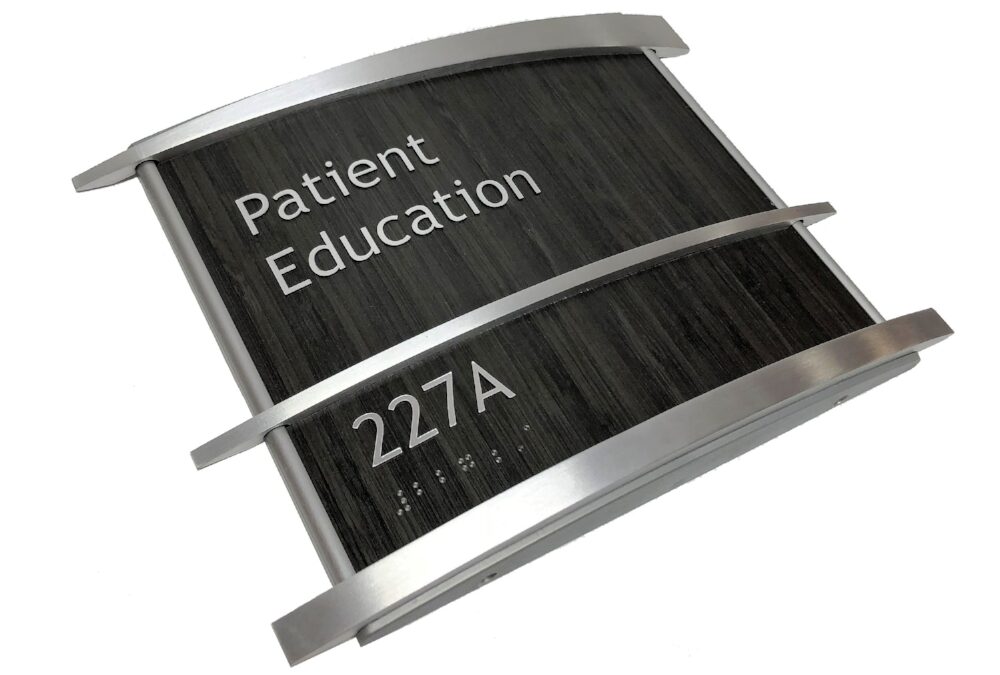
Medical offices throughout Boulder, CO face unique challenges when installing ADA-compliant wayfinding signage. Between historic downtown buildings with narrow corridors and modern medical complexes in east Boulder, proper sign installation requires understanding both federal accessibility standards and local building characteristics. Getting installation right the first time prevents costly corrections and ensures your patients can navigate your facility safely and independently.
Quick Answer
ADA wayfinding signs in medical offices must be mounted at 48–60 inches from the floor to the center of the sign, positioned on the latch side of doors, and include tactile characters with Grade 2 Braille. Signs should be installed where patients can approach within 3 inches for tactile reading without obstructing door swings or hallway traffic flow.
Why Proper ADA Wayfinding Installation Matters for Medical Offices
Medical facilities serve patients who may already be experiencing stress, pain, or confusion. Clear wayfinding becomes essential—not optional. In Boulder's medical community, practices range from single-provider clinics in converted Victorian homes to multi-story facilities near Foothills Hospital. Each setting demands precise ADA sign installation to serve patients with visual impairments, cognitive challenges, or mobility limitations.
Beyond patient experience, improper installation creates real liability. The Americans with Disabilities Act establishes specific mounting requirements, and Colorado's building codes add additional considerations. Medical offices found non-compliant during inspections face correction orders, potential fines, and—more significantly—barriers that prevent patients from accessing care.
For Boulder medical practices, proper installation also reflects professional standards. Patients notice details. Signs mounted at inconsistent heights or positioned where they're difficult to read suggest a lack of attention that patients may extend to their perception of clinical care.
Best Sign Types for Medical Office ADA Wayfinding
Medical offices typically need several categories of ADA wayfinding signs, each with specific installation requirements:
**Room Identification Signs** identify examination rooms, restrooms, staff areas, and administrative offices. These require tactile raised characters and Grade 2 Braille, mounted adjacent to the door they identify.
**Directional Signs** guide patients through corridors toward departments, exits, or services like radiology, lab services, or checkout. While directional signs don't always require tactile elements, maintaining consistent mounting heights improves usability for all patients.
**Informational Signs** communicate policies, hours, or instructions. In medical settings, these often include check-in procedures or patient rights notices.
**Overhead Signs** help patients identify departments from a distance. These supplement—but don't replace—tactile wall-mounted signs.
For Boulder medical offices, sign materials matter. High-traffic areas benefit from photopolymer or cast acrylic signs that withstand frequent cleaning with medical-grade disinfectants. Facilities using natural light extensively should select UV-stable materials to prevent fading.
Step-by-Step ADA Sign Installation for Medical Facilities
Proper installation follows a systematic process that accounts for ADA requirements and practical facility considerations.
**Step 1: Survey and Document Existing Conditions** Before installation begins, walk the entire facility to identify every location requiring signage. Document door swing directions, corridor widths, existing sign locations, and any architectural features that might affect mounting. In older Boulder buildings, you may encounter irregular wall surfaces, decorative moldings, or non-standard door frames.
**Step 2: Determine Mounting Positions** ADA requires tactile signs to be mounted on the wall adjacent to the latch side of the door. The baseline measurement places the sign so tactile characters fall between 48 and 60 inches above the finished floor. Position signs so a person can approach within 3 inches without standing in the door swing path.
For double doors without a center post, mount the sign on the nearest adjacent wall. When walls aren't available (glass partitions are common in modern Boulder medical buildings), projecting signs or adjacent pylons may be necessary.
**Step 3: Verify Approach Clearance** Patients reading tactile signs need an 18x18 inch clear floor space in front of the sign. Check that furniture, planters, medical equipment, or door swings don't obstruct this area. In tight Boulder medical office corridors, this often requires careful furniture arrangement.
**Step 4: Install Mounting Hardware** Use appropriate fasteners for your wall type. Drywall requires anchors rated for the sign weight. Concrete or masonry walls (common in Boulder's older commercial buildings) need masonry anchors. For signs on glass, use approved adhesive mounting systems designed for the glass thickness.
**Step 5: Level and Secure Signs** Use a level during installation—even small deviations are noticeable and suggest unprofessional installation. Secure signs firmly; they'll be touched regularly by patients reading Braille.
**Step 6: Verify Measurements and Compliance** After installation, re-measure each sign to confirm proper height and positioning. Document installations photographically for your compliance records.
Local Installation Considerations in Boulder and Nearby Areas
Boulder County's building stock presents specific installation challenges that affect ADA wayfinding sign projects.
**Historic Buildings**: Many Boulder medical practices occupy buildings in historic districts or older commercial structures. These buildings may have plaster walls that require special anchoring, decorative trim that affects sign placement, or corridors that don't meet modern ADA width standards. Sign installation must work within these constraints while still meeting accessibility requirements.
**Altitude and Climate**: Boulder's high altitude means more UV exposure, which affects sign materials and adhesives. Temperature swings from summer heat to winter cold stress mounting adhesives. Specify materials and installation methods rated for these conditions.
**Local Building Department Requirements**: Boulder's building department and those in Longmont, Lafayette, and Erie may have specific permitting or inspection requirements for signage projects. Medical facilities undergoing tenant improvements typically include signage in their building permit scope.
**Multi-Tenant Medical Buildings**: Medical office complexes common along Foothills Parkway and in Longmont's medical corridors often have building-wide wayfinding standards. Individual practice signage must integrate with existing systems while meeting ADA requirements for the specific suite.
**Seismic Considerations**: Colorado's Front Range has seismic activity considerations that affect how signs should be anchored, particularly heavier overhead directional signs in medical facilities.
Common Installation Mistakes Medical Offices Make
Even well-intentioned medical practices make installation errors that compromise accessibility or require costly corrections.
**Mounting Signs on Doors**: This is perhaps the most common error. ADA requires tactile signs on the wall beside doors, not on the door itself. Signs on doors move when opened, making them impossible to read tactilely.
**Incorrect Height Placement**: Installing signs based on visual aesthetics rather than ADA measurements creates compliance problems. The 48–60 inch range for tactile character centerlines isn't arbitrary—it ensures readability for standing and seated individuals.
**Wrong Side of Door**: Signs must be on the latch side, not the hinge side. This allows patients to read the sign while positioned to open the door.
**Obstructed Approach**: Placing furniture, plants, or equipment in front of signs prevents the required clear floor space for tactile reading.
**Inconsistent Mounting Heights**: Varying sign heights throughout a facility creates confusion and suggests non-compliance even when individual signs meet requirements.
**Using Non-Compliant Signs**: Some practices purchase decorative signs that lack proper tactile characters or Braille, then mount them correctly but remain non-compliant due to the signs themselves.
**Forgetting Temporary Construction Signage**: During renovations, temporary ADA-compliant wayfinding must maintain accessibility. Boulder medical practices undergoing improvements sometimes overlook this requirement.
Serving Boulder and Nearby Communities
Medical practices throughout Boulder County rely on proper ADA wayfinding to serve their communities effectively. From dental offices in downtown Boulder to urgent care facilities in Longmont, specialty practices in Lafayette, and family medicine clinics in Erie, each facility has unique installation requirements based on building type, patient population, and service offerings.
Boulder's medical community includes teaching facilities affiliated with CU, independent practices in professional office buildings, and integrated health centers in retail locations. Each setting requires thoughtful wayfinding installation that considers patient flow patterns, staff needs, and regulatory compliance.
Practices in Gunbarrel and Lyons serve both local residents and visitors to Boulder County's recreational areas, making clear wayfinding even more important for patients unfamiliar with the facility.
Planning Your Medical Office Wayfinding Project
Successful ADA wayfinding installation begins with comprehensive planning. Conduct a thorough facility assessment to identify all sign locations, document existing conditions, and determine any structural challenges. Consider patient flow from parking through checkout to ensure wayfinding supports the complete visit experience.
For Boulder medical offices planning wayfinding improvements, consulting with a professional sign company familiar with ADA requirements and local building conditions helps avoid common pitfalls. Proper planning, quality materials, and correct installation create wayfinding systems that serve patients effectively for years while maintaining full compliance with accessibility standards.
Frequently Asked Questions
What is the correct mounting height for ADA signs in medical offices?
ADA tactile signs must be mounted so the tactile characters and Braille are positioned between 48 and 60 inches above the finished floor, measured to the center of the tactile elements. This height range ensures readability for both standing and seated individuals. The sign should be mounted on the wall adjacent to the latch side of the door, positioned so patients can approach within 3 inches without standing in the door swing path.
Do all signs in a medical office need to be ADA compliant?
Not all signs require full ADA compliance with tactile characters and Braille. Room identification signs for permanent rooms and spaces must be ADA compliant. Directional and informational signs that don’t identify specific rooms have different requirements—they must meet visual accessibility standards but don’t always require tactile elements. However, maintaining consistent design and mounting throughout your facility improves usability for all patients.
Can ADA wayfinding signs be mounted on glass walls or partitions?
Yes, but glass mounting requires specific approaches. When signs cannot be mounted on a wall adjacent to a door due to glass partitions, you can use projecting signs mounted perpendicular to the glass, freestanding sign pylons, or approved adhesive mounting systems designed for glass. The key requirement is maintaining proper height and ensuring patients can approach the tactile elements without obstruction.
How often should medical office ADA signs be inspected or replaced?
Inspect ADA wayfinding signs quarterly for damage, fading, or mounting issues. Signs in high-traffic medical areas experience wear from frequent touching and cleaning with disinfectants. Replace signs when tactile characters become worn smooth, Braille dots are damaged or missing, colors fade affecting contrast requirements, or mounting becomes loose. Most quality ADA signs last 7–10 years with proper care in medical environments.
What happens if our Boulder medical office fails an ADA sign inspection?
If your facility fails an ADA inspection for signage issues, you’ll typically receive a correction notice specifying required changes and a compliance deadline. Penalties vary based on whether the issue resulted from new construction, alterations, or existing conditions. Most inspectors work with medical practices to develop reasonable correction timelines. Addressing issues promptly demonstrates good faith compliance efforts and minimizes potential liability from patient complaints.